Kenya · Crash game guide
Aviator: Spribe crash slot mechanics and betting guide for Kenyan players
A clear, practical look at how Aviator rounds, cash-outs and mobile play work for users in Kenya — including RTP, stake ranges in KSh and what operator caps can mean for payouts.
Specs
Betting range, stake sizes and maximum win in Kenya
Core numbers that matter to Kenyan players — from game data and typical operator settings. Exact limits remain operator-dependent.
| Specification | Typical value |
|---|---|
| Developer | Spribe |
| RTP | 97% |
| Volatility | Medium (player-controlled) |
| Min bet (common) | 5 KES |
| Max bet (common) | 10,000 KES |
| Max win | Up to x10,000 (operator cash cap often applied) |
In Kenyan sites Aviator commonly opens with a minimum bet near 5 KES. Some operators set slightly higher minimums around 10–13 KES. The maximum bet seen on many sites is 10,000 KES. Operators control exact limits and whether they allow two bets per round. These values are common but operator-dependent, so the exact minimum or maximum can differ by site.
Aviator nominally supports wins up to x10,000 the stake. Many operators apply a cash cap per round. A common cap reported locally is around 1,000,000 KES for a single round, though the actual cap is set by each operator. That means the theoretical multiplier may be limited in practice by a cash ceiling. In simple terms: the payout is stake times multiplier but the operator may stop the real cash paid at a fixed top amount.
The table gives a quick reference to core numbers that matter to Kenyan players. These values are supplied by game data and typical operator settings. They help set expectations before playing a session where stakes and caps are important.
Review
First look — what Aviator is and how it feels
Aviator is a crash-style game made by the developer Spribe. It does not use reels, rows or paylines. Instead, each round shows a small plane taking off. A multiplier number climbs while the plane flies. The round ends with a crash at an unpredictable moment. Players place a bet at the start and then choose when to cash out. Cashing out earlier gives a small win, waiting longer can give a bigger multiplier but also risks the crash. The visual design is simple and clean. In Kenya the game is often listed under live or fast games on local sites.

The layout is easy to read on a phone or a desktop. The multiplier is large and clear. Buttons for placing a bet, quick stakes and automatic cash-out are usually on the same screen. There are no free spins, no wilds and no scatters. Rounds are short and repeat quickly, which shapes the whole experience.
How Aviator plays — round flow and core controls
A single round starts when players place a stake. The operator opens a brief window to join. After bets close the plane takes off and the multiplier begins to grow from 1.00x upwards. Players can press cash-out at any time to lock their multiplier and collect a win equal to stake times multiplier. If the round crashes before cash-out, the stake is lost. Some operators allow up to two bets per round. That means a player can split risk across two stakes in the same round when the operator supports this feature.
Most versions include a manual cash-out button and optional auto cash-out. Auto cash-out allows a player to set a target multiplier and leave the action to the game. A small history panel usually shows recent round multipliers and some user stats. The interface is lean on purpose: the goal is speed and clear choices.
Game math — RTP, volatility and what they mean
Spribe lists Aviator with a 97% RTP. RTP means the long-term expected return to players. At 97% the number sits above many traditional slots. It is still a theoretical value that shows how the game pays out over a very large set of rounds. The volatility is described as medium, but it behaves differently from a normal slot volatility because players control when they cash out.
In plain terms: skill in timing affects short-term results, but the underlying odds and house edge are fixed by the game's algorithm and provably fair system used by many operators.
Timing, session rhythm and simple bankroll steps
Aviator moves fast. Rounds take only a few seconds from takeoff to crash. This creates a rhythm of many quick decisions rather than long spins. Players who prefer slow sessions may find the pace intense. A common approach in Kenya is to treat a session like a set of short bets and set a modest stake per round.
Bankroll steps are simple. Choose a unit stake that fits the session and stick to it. If the minimum is 5 KES, a player can run many rounds with small risk. If the maximum is 10,000 KES, larger single-round bets are possible but risky. Because rounds are short, repeated losses and wins can add up quickly, so a clear stake plan is useful.
Strategy and the cash-out decision
No strategy guarantees profit. The main choice in Aviator is when to cash out. Some players set an auto cash-out at a low multiplier, for example 1.5x, to collect steady small wins. Others prefer to chase higher multipliers and accept more frequent losses. Splitting a stake into two bets can let one bet use a low auto cash-out while the other aims higher, if the operator allows two simultaneous bets.
Timing is partly psychological. Seeing a string of high or low rounds can influence decisions. A clear rule helps avoid emotional mistakes. For instance, a session plan could be: small fixed stake, auto cash-out at chosen multiplier, stop after a set number of rounds or a profit target. That keeps the game simple and avoids endless chasing.
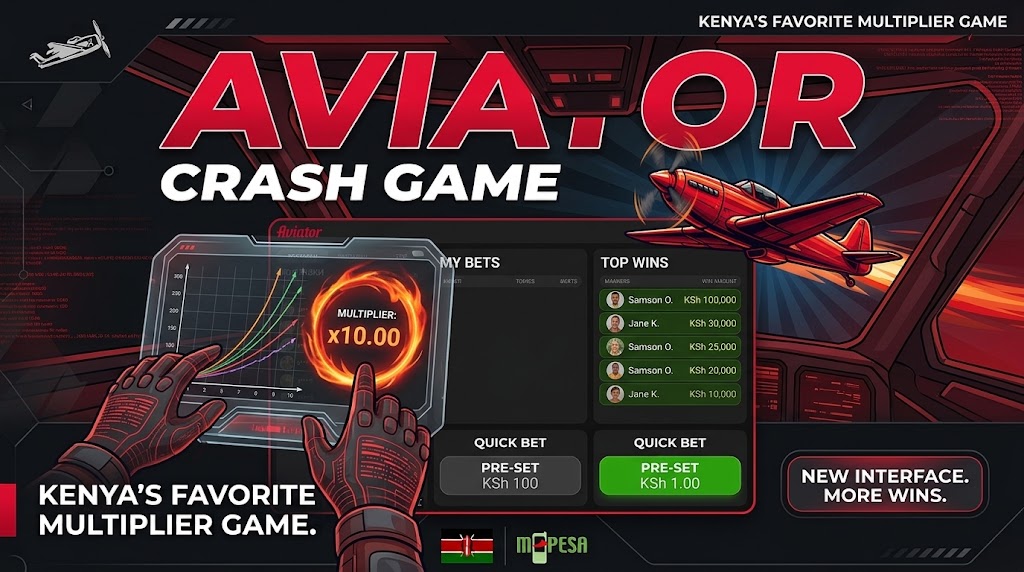
Mobile play and controls on Kenyan networks
Aviator adapts well to mobile. The interface is compact; buttons are large and the multiplier display is readable on small screens. Mobile play matters in Kenya because many players use phones as the main device. The game performs smoothly on modern smartphones and handles network changes reasonably well thanks to compact visuals.
When the connection is slow, the interface may delay updates or history. The cash-out command is usually prioritized so a slow connection does not always block a timely cash-out, but players should be aware that network lag can affect very tight timing. For short sessions on mobile, picking a slightly earlier auto cash-out can reduce the risk from lag.
Auto cash-out, quick stake buttons and a history timeline are the core mobile controls. Operators often add a simple settings area to set sound, notifications and auto cash-out rules. These small options make the mobile session more manageable and let a player tune the pace for local conditions.
Visuals, sound and interface clarity
Visually, Aviator keeps the focus on the multiplier and a small plane animation. Backgrounds are neutral and the sound cues mainly mark takeoff, climb and crash. The minimalist design helps players make quick decisions without distraction. The history list shows previous multiplier results so players can check recent outcomes, though every round is independent from the last.

Because the game has no reels or bonus rounds it relies on clear timing, good buttons and a readable multiplier. Operators usually include a small help button that explains how cash-out and auto cash-out work. That short info is useful for new players or those switching from traditional slots.
Where Aviator fits in a Kenyan player's routine
Aviator suits players who like fast decisions and flexible stakes. It is not a slot with bonus features or long free-spin rounds. Instead, it is a quick betting game where timing matters. For short breaks or quick sessions, Aviator fits well. Players who prefer long tactical sessions with layered features may miss those extras here.
Local habits show many players enjoy Aviator for social streams or group sessions because rounds are short and easy to follow. The visual multiplier makes wins instantly visible and easy to celebrate in small groups.
Strengths and limitations — plain facts
- Strength: Simple, fast gameplay that is easy to learn.
- Strength: Player control over volatility via cash-out timing.
- Strength: Clear RTP value of 97% supplied by the developer.
- Limitation: No traditional slot features like free spins, wilds or scatters.
- Limitation: Big wins can be limited by operator cash caps despite high multipliers.
- Limitation: Short rounds can encourage rapid staking and require discipline.
Features
Cash-out payout calculator
Estimate a potential return in Kenyan shillings (KSh) for a chosen stake and target multiplier. This is an educational tool only — it does not place bets or predict crashes.
KSh 100
x1.50
Operator cash caps (for example around 1,000,000 KES on some sites) can still limit the cash paid even when the multiplier is higher. Always check the operator’s own limits.
FAQ
Common questions Kenyan players ask
How does Aviator differ from a normal slot?
Aviator does not use reels, paylines, wilds or scatters. It is a crash-style game where a multiplier rises until a crash ends the round. The main decision is when to cash out, not how symbols line up. That makes it feel different from traditional slot mechanics.
Is the 97% RTP reliable for short sessions?
The 97% RTP is the long-term theoretical return. In short sessions outcomes can vary widely. Because players choose cash-out timing, short-term wins or losses depend strongly on those timing choices. RTP is useful for understanding the game's long-run behaviour, not a guarantee for any single session.
What stake sizes should Kenyan players use?
Common minimum stakes on local sites are around 5 KES. A simple rule is to pick a stake that allows many rounds without risking the whole bankroll. If an operator lets a player place two bets per round, splitting a stake between low and high cash-out plans is an option to manage risk.
Can a player test Aviator for free?
Some sites offer demo or play-money modes for Aviator. Demo play is a good way to learn the timing, use auto cash-out and see how the interface behaves on a phone. Demo rounds do not use real money but still help build timing habits.
How do operator cash caps affect maximum wins?
While Aviator can show very high multipliers, operators often apply a cash cap per round. This means a theoretical x10,000 multiplier may be limited by a fixed maximum payout, often set by the operator. Players should check the site terms or game info to know the exact cap used on that operator.
Ready to revisit the key numbers?
Return to the specs table for RTP, stake ranges in KES and max-win notes, or use the calculator to explore cash-out targets before you play.